 (507) 720-3450
 info@fountainscapesandwaterfalls.com




Pond Landscaping Ideas
Landscaping Around a Pond: Design Ideas That Actually Work
A backyard pond should not look like a hole in the yard with rocks around it. The best ponds feel like they belong there because the stone, plants, seating areas, lighting, and surrounding landscape all work together.
Serving New Ulm, Mankato, Southern Minnesota, and select Twin Cities projects.
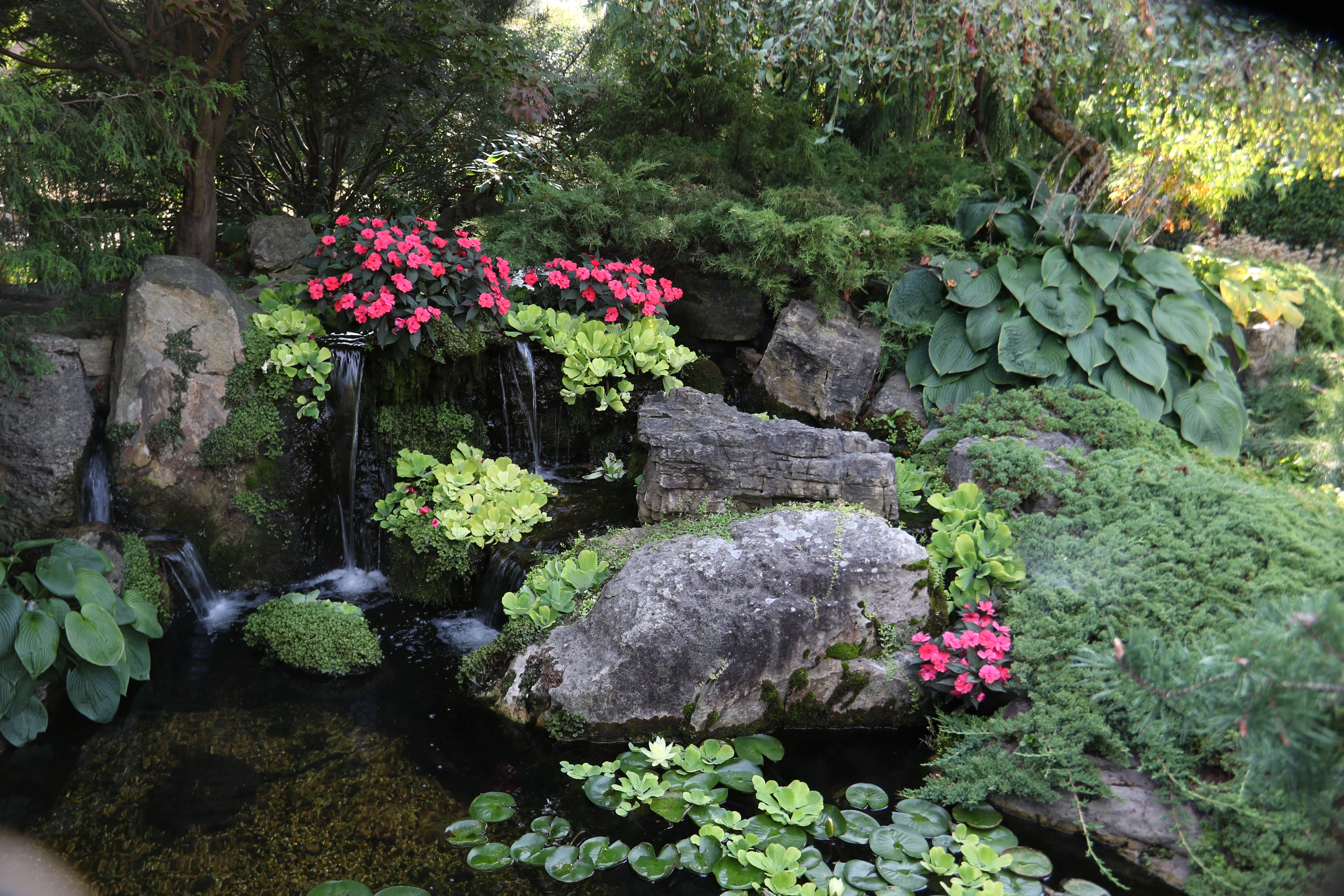
Start With the Whole Yard
A Pond Should Feel Like It Belongs in the Landscape
Landscaping around a pond is not just about adding plants after the pond is built. It is about shaping the entire scene so the water, stone, plants, patio, viewing angles, and maintenance access all work together.
When the landscape is planned well, the pond feels settled into the yard. The edges soften. The stone looks natural. The plants frame the water. The seating areas make sense. The whole space starts to feel intentional.
Here are practical pond landscaping ideas that can help a backyard pond look more natural, more finished, and easier to enjoy.
Design Idea 1
Start With Natural Stone
Stone is the foundation of most successful pond landscaping. Boulders, transition stones, gravel, and outcroppings help hide the pond liner, shape the shoreline, and make the edge feel natural.
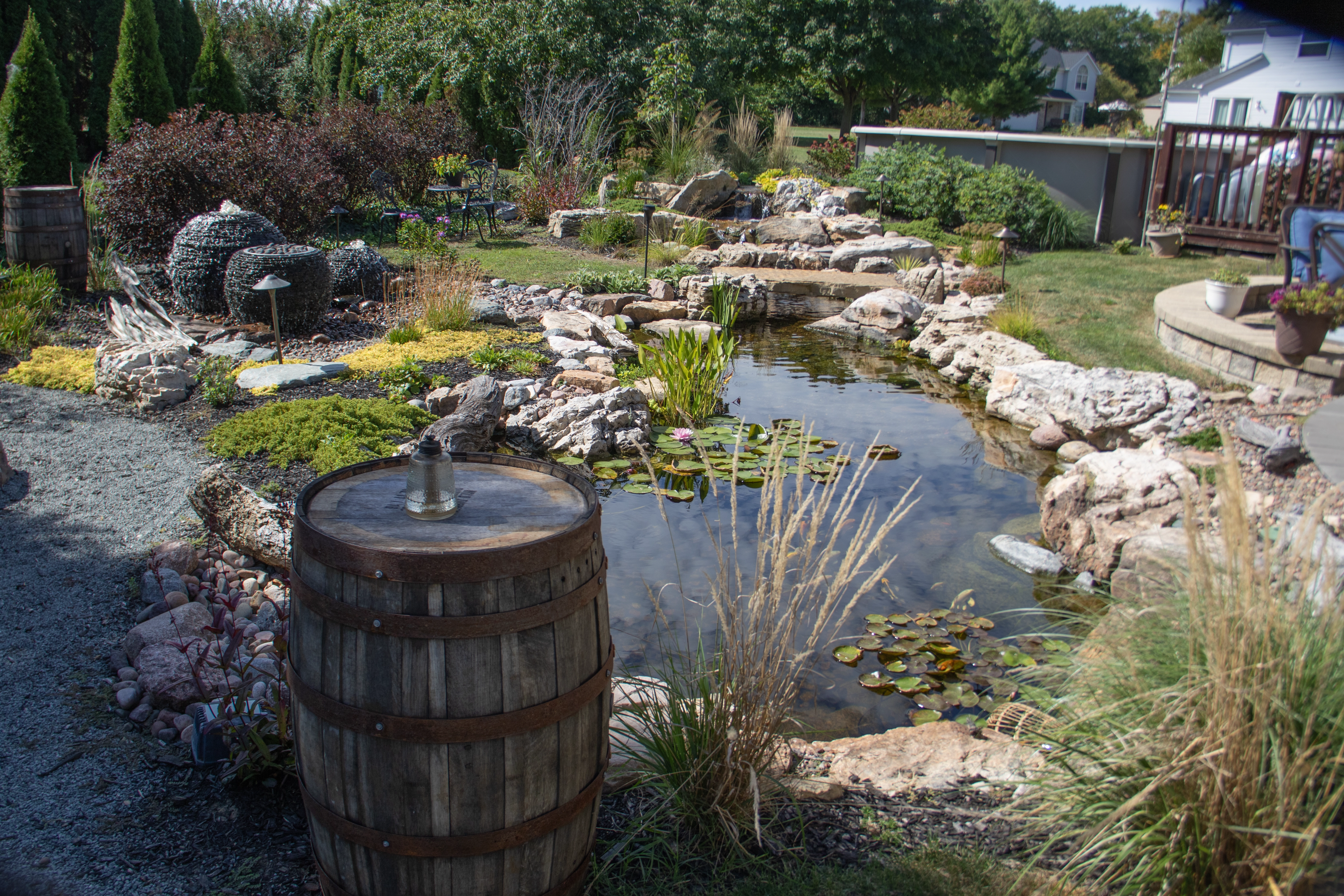
A pond edge should not look like a necklace of identical rocks. Natural-looking pond edges usually combine larger boulders, flatter transition stones, gravel pockets, and planting areas.
Stone Can Help With
- Hiding liner and construction materials
- Creating a natural shoreline
- Framing waterfalls and streams
- Building planting pockets
- Connecting the pond to patios, paths, and garden beds
For homeowners planning a new pond, stonework should be part of the original design, not a finishing touch added later.
Design Idea 2
Layer Plants Like Nature Does
Good pond landscaping uses layers. Instead of placing one row of plants around the edge, the goal is to create depth: low plants near the water, medium plants around the shoreline, and larger plants in the background.
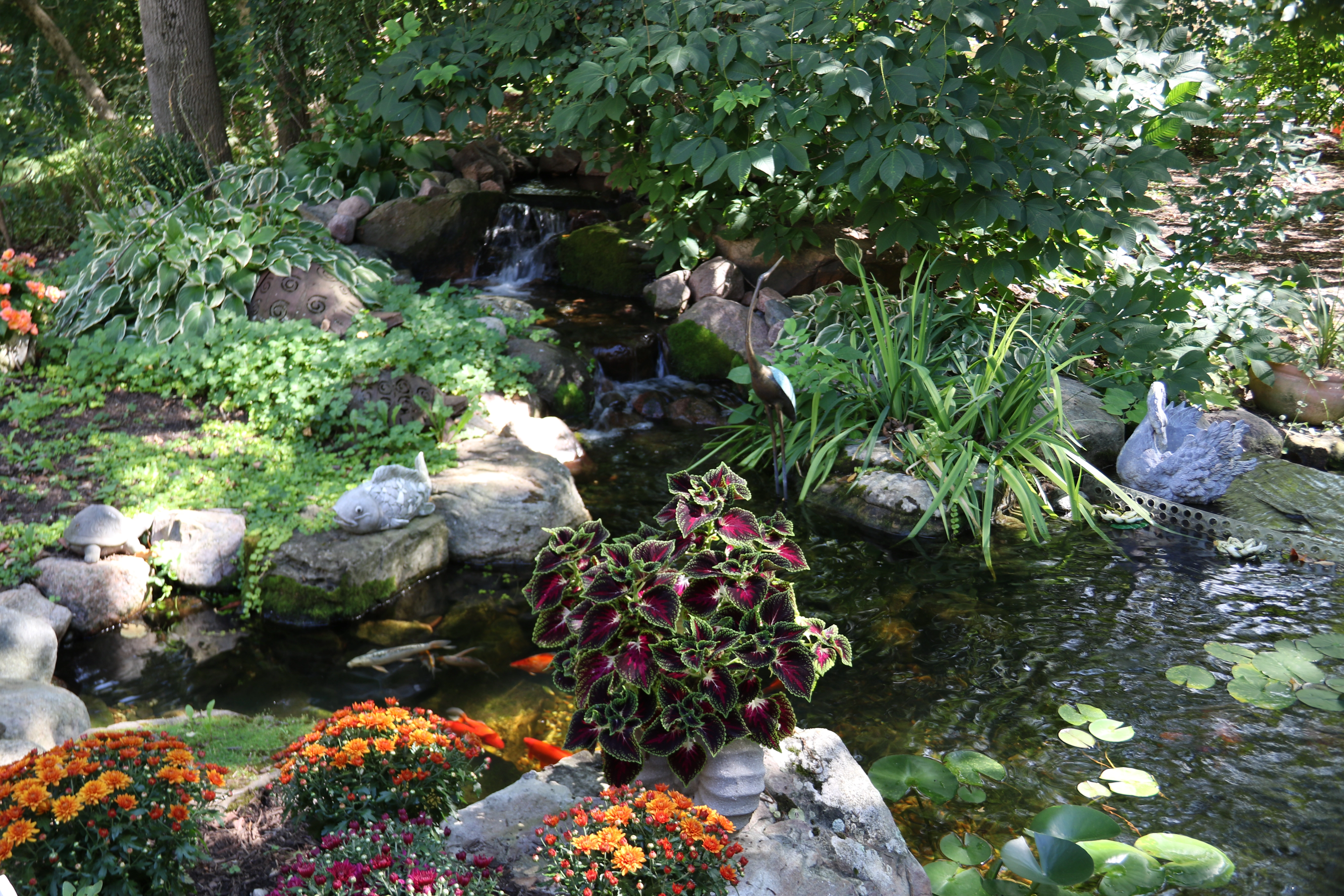
Background Plants
Background plants create enclosure and help the pond feel settled into the yard. Ornamental grasses, shrubs, evergreens, and small ornamental trees can all work well, depending on the site.
Midground Plants
Hostas, daylilies, ferns, iris, sedges, and compact shrubs help connect the larger landscape to the pond edge.
Foreground Plants
Groundcovers, creeping plants, low perennials, and small accent plants help soften stone edges and reduce the harsh line between rock and water.
The best planting designs look full without making the pond impossible to maintain. That balance matters.
Design Idea 3
Use Aquatic Plants Inside the Pond
Some of the most important landscaping around a pond happens inside the pond itself. Aquatic plants help soften the water surface, provide shade, support the ecosystem, and make the pond look alive.
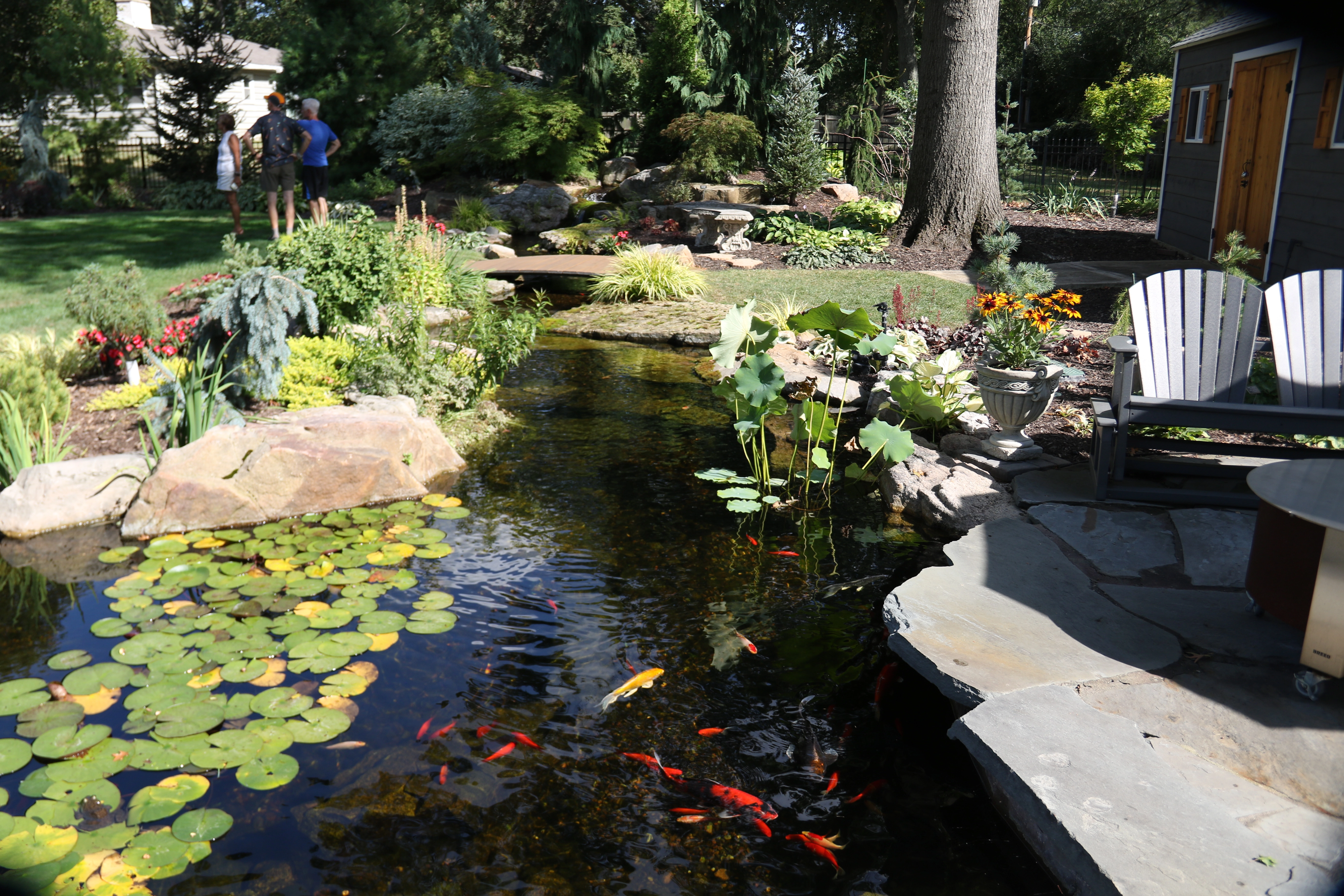
Useful Aquatic Plant Types
- Water lilies: Provide surface coverage, color, and shade.
- Marginal plants: Soften edges and create vertical interest.
- Iris: Adds height, flowers, and natural shoreline texture.
- Pickerel rush: Works well near pond edges and shallow shelves.
- Floating plants: Can add seasonal coverage when appropriate.
Aquatic plants should be selected with the pond’s size, sunlight, fish load, and maintenance goals in mind.
If you are planning fish or koi, visit our Cold Climate Koi Guide and pond fish resources for more ownership guidance.
Design Idea 4
Create Viewing Areas From the Places You Actually Use
A pond should be designed from the places people spend time. That may be a patio, kitchen window, deck, fire pit, walkway, or favorite chair.
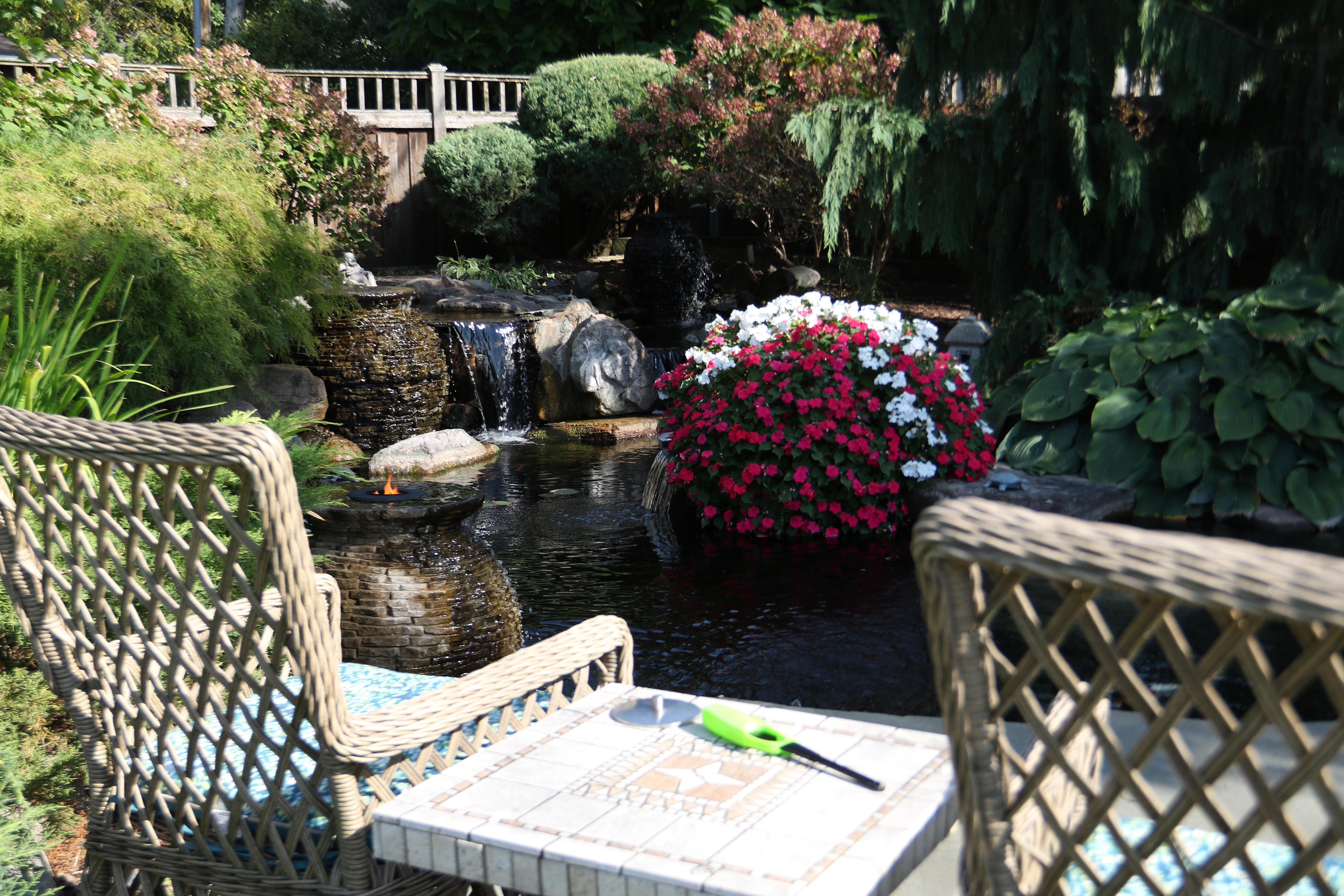
One common mistake is designing the pond only from the top-down layout. A pond may look fine on paper but feel disconnected in real life if it cannot be seen, heard, or enjoyed from the right areas.
Important Viewing Angles
- From the patio or deck
- From inside the home
- From the main walkway
- From outdoor seating areas
- From the approach into the backyard
Before building, ask where you want to experience the pond most often. That answer should influence the layout.
Design Idea 5
Add Lighting for Nighttime Enjoyment
Pond landscaping does not stop when the sun goes down. Lighting can reveal waterfalls, highlight plants, brighten paths, and make the pond visible from outdoor seating areas after dark.
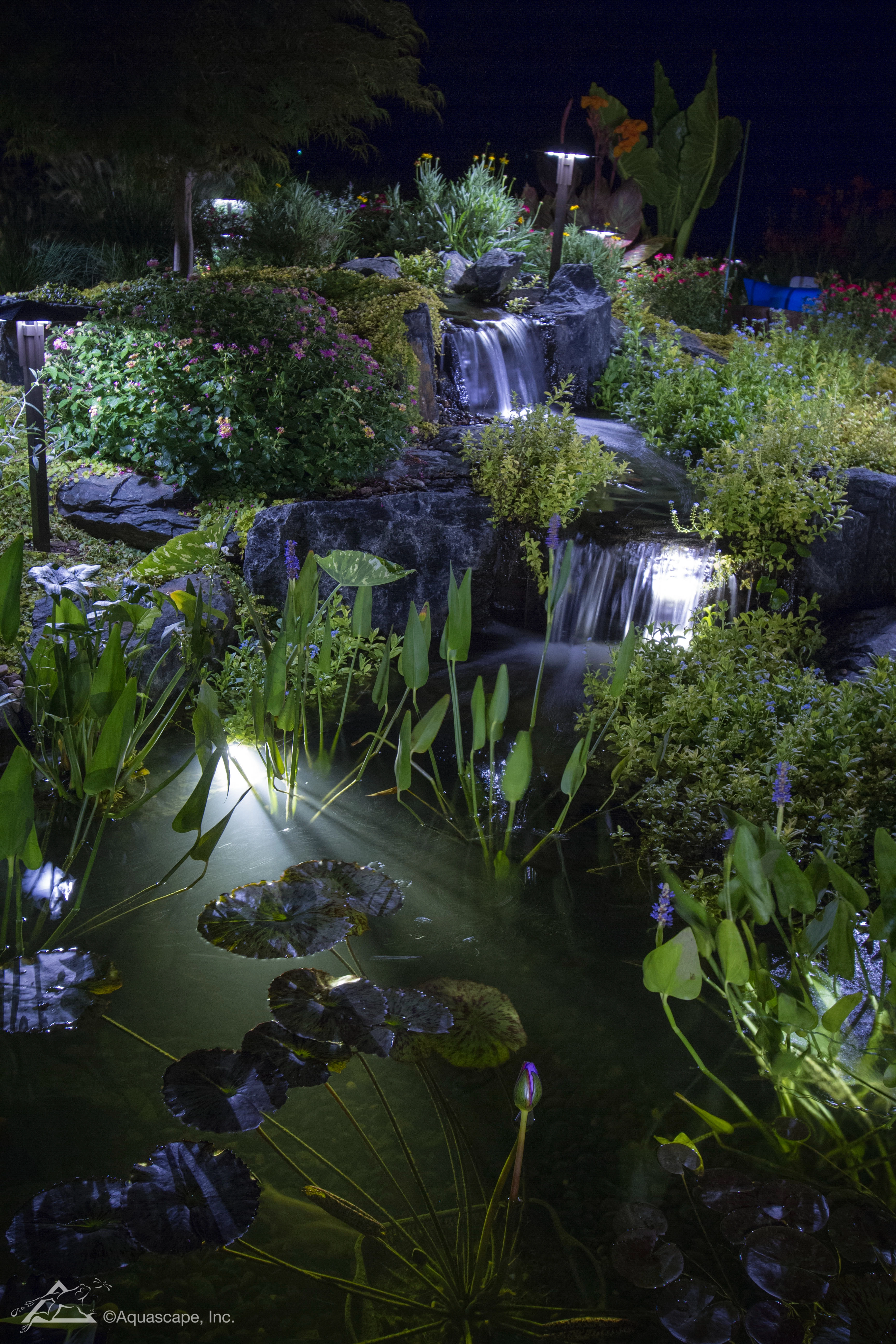
Lighting Ideas Around a Pond
- Underwater lights near waterfalls
- Accent lights on boulders and spillways
- Path lights near seating areas
- Soft uplighting on ornamental grasses or shrubs
- Subtle lighting near bridges, steps, or transitions
The goal is not to flood the yard with brightness. The goal is to guide the eye, reveal movement, and make the space feel usable at night.
Learn more about our water feature lighting design and installation.
Design Idea 6
Create Places to Sit Near the Pond
A pond becomes more valuable when people can comfortably spend time near it. Seating areas turn the pond from something you look at into something you use.
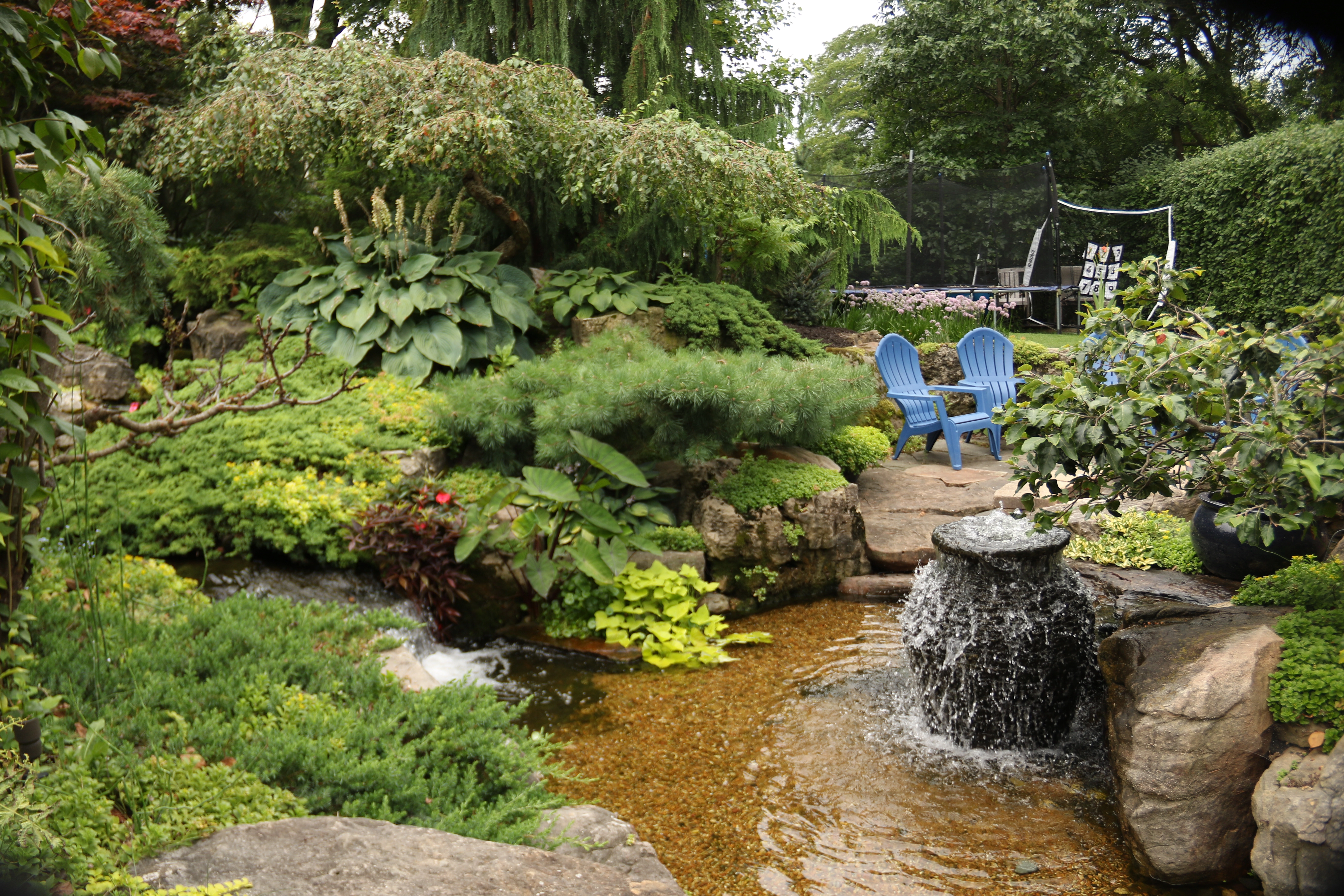
Seating Ideas Around a Pond
- A small patio near the water
- A bench with a direct view of the waterfall
- A natural stone sitting edge
- A table and chairs nearby
- A fire pit area with the pond in view
- A pergola, trellis, or garden room nearby
The seating does not have to be large. Even one well-placed chair can change how often the pond gets used.
Avoid These Problems
Common Pond Landscaping Mistakes
A pond can be built well and still feel unfinished if the surrounding landscape is not planned carefully. These are some of the most common mistakes to avoid.
Leaving Exposed Liner
Visible liner is one of the fastest ways to make a pond look unfinished. Proper stonework, gravel, and planting pockets help hide the construction details.
Using Too Many Small Rocks
A ring of small, similar-sized stones can make the pond look artificial. Larger boulders, mixed stone sizes, and natural transitions usually look better.
Planting Trees Too Close
Trees can provide shade and atmosphere, but they can also add leaves, roots, and maintenance concerns. Placement matters.
Ignoring Maintenance Access
Plants and stonework should not block skimmers, filters, pumps, or safe access points. A beautiful pond still needs to be serviceable.
Forgetting the View From the House
In Minnesota, you will not be outside every day of the year. A pond that can be enjoyed from indoors gives the feature more value across the seasons.
Simple Planning Framework
A Practical Pond Landscaping Layout
A strong pond landscape often includes five zones:
- The water zone: pond, waterfall, aquatic plants, and fish.
- The stone zone: boulders, gravel, shoreline, and transition rocks.
- The planting zone: groundcovers, perennials, shrubs, and ornamental grasses.
- The viewing zone: patio, bench, walkway, deck, or indoor view.
- The service zone: access for maintenance, pumps, filters, and seasonal care.
When those zones are planned together, the pond feels natural and remains easier to care for.
Keep Exploring
Related Guides
- Ecosystem Ponds — Learn about custom pond design and installation.
- Water Feature Lighting — See how lighting extends the enjoyment of ponds and waterfalls.
- Is a Backyard Water Feature Worth It in Minnesota? — Decide whether a pond fits your lifestyle and goals.
- Can You Add a Water Feature to an Existing Yard? — Explore how ponds and waterfalls can fit into mature landscapes.
- Maintenance Programs — Understand seasonal pond care and long-term ownership.
Common Questions
Frequently Asked Questions
What should I put around a backyard pond?
Natural stone, gravel, aquatic plants, groundcovers, perennials, shrubs, lighting, and seating areas can all work well around a backyard pond. The best design depends on the pond style, available space, sunlight, maintenance access, and how the yard is used.
How do you make a pond look natural?
A pond looks more natural when the edge is softened with mixed-size boulders, gravel, aquatic plants, layered landscape plants, and thoughtful transitions into the surrounding yard. Avoid exposed liner and a uniform ring of small rocks.
What plants work well around a pond in Minnesota?
Many Minnesota pond landscapes can use hostas, ornamental grasses, sedges, daylilies, ferns, iris, creeping groundcovers, shrubs, and selected aquatic plants. Plant choice should be based on sun exposure, moisture, winter hardiness, and maintenance goals.
Should a pond be close to a patio?
A pond can work very well near a patio because the sound, movement, fish, and lighting become part of daily outdoor living. The design should still account for safety, circulation, access, seating, and maintenance.
Can pond landscaping reduce maintenance?
Good landscaping can make maintenance easier when it protects edges, limits debris problems, allows access to equipment, and supports a balanced ecosystem. Poor plant placement or blocked access can make maintenance harder.
Next Step
Ready to Build a Pond That Looks Like It Belongs There?
A beautiful pond is not just water. It is stone, plants, sound, movement, lighting, access, and the way the whole backyard feels when you step outside.
Fountainscapes & Waterfalls designs and builds custom ecosystem ponds, waterfalls, fountainscapes, lighting, and maintenance programs for Minnesota homeowners who want their outdoor spaces to feel more alive.
Ready to Move Forward? Schedule Your Design Consultation. Design consultations are $250 and credited toward the project if you move forward with construction.