 (507) 720-3450
 info@fountainscapesandwaterfalls.com



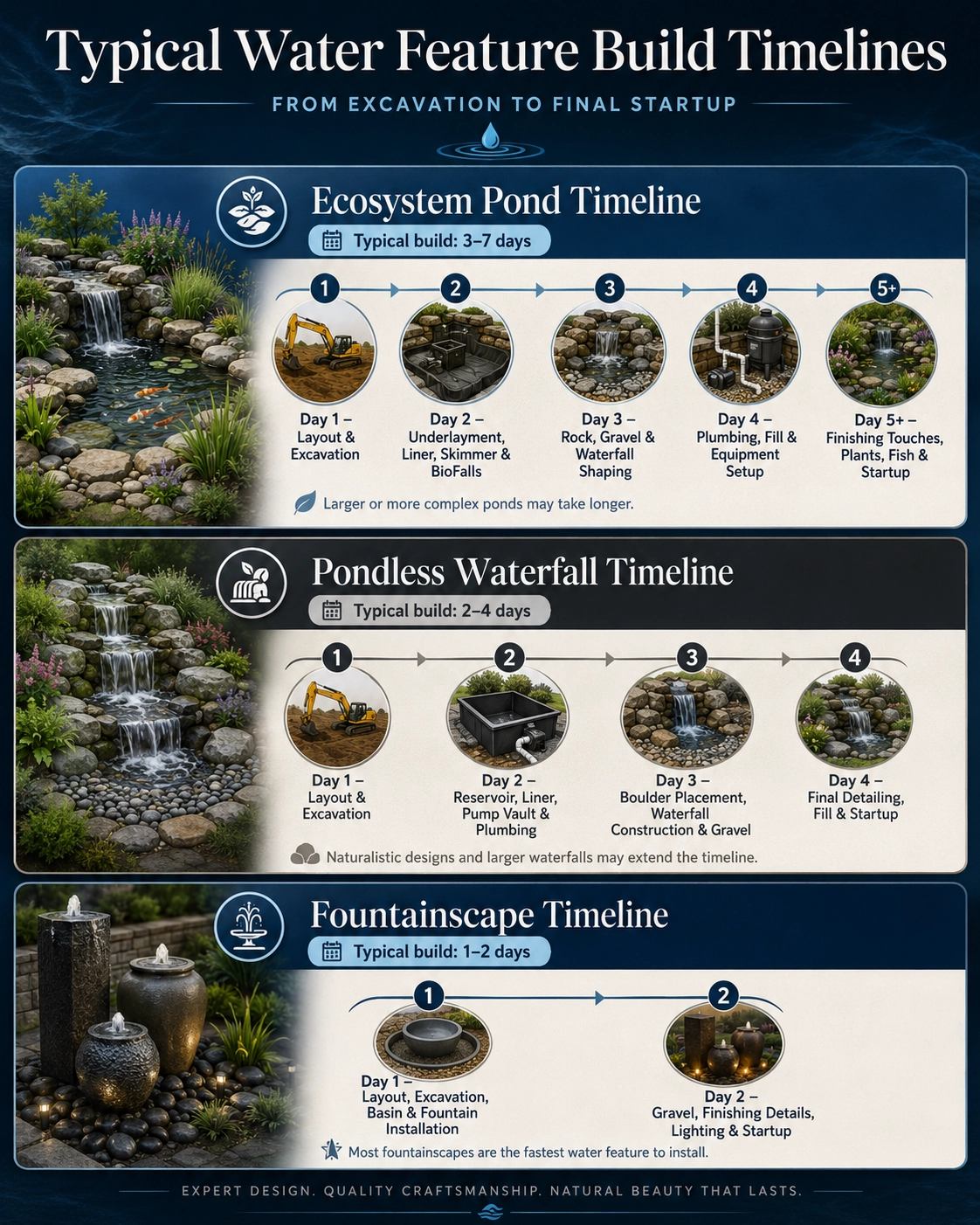
Quick Answer: How Long Does a Water Feature Take to Build?
A simple backyard fountainscape may take a short installation window when the site is easy to access and the design is straightforward. A pondless waterfall or ecosystem pond usually takes several working days. Larger custom water features with streams, natural stone, bridges, lighting, planting areas, multiple waterfalls, or difficult access can take longer.
The important thing to understand is that the installation timeline is not only about digging a hole or setting a fountain. A long-lasting water feature has to be shaped correctly, plumbed correctly, filtered correctly, and finished in a way that looks natural instead of dropped into the yard like a plastic bathtub wearing a rock hat.
Simple rule: the more natural, integrated, and custom the water feature is, the more time it usually takes to build properly.
Typical Water Feature Installation Timelines
Every project is different, but the table below gives a practical starting point for understanding how long different types of water features may take.
| Water Feature Type | Typical Installation Timeline | What Affects the Timeline |
|---|---|---|
| Small fountainscape | Often the shortest timeline | Site access, basin size, fountain type, rock dressing, and nearby landscaping |
| Pondless waterfall | Usually multiple working days | Stream length, reservoir size, boulder work, elevation change, and waterfall detail |
| Ecosystem pond | Usually multiple working days | Excavation, shelves, skimmer, BioFalls, liner, underlayment, rock, gravel, plumbing, and startup |
| Large custom water feature | Can take longer depending on scope | Multiple waterfalls, bridges, large stone, lighting, fish caves, patios, planting zones, and site complexity |
These are general timeline categories, not fixed promises. A small feature with terrible access may take longer than a larger feature with clean access and a simple layout.
Timeline by Water Feature Type
Small Fountainscapes
Fountainscapes are often the fastest type of water feature to install because they usually use a basin or reservoir instead of a full pond ecosystem. They work well near patios, entryways, garden beds, small yards, and areas where you want sound and movement without a larger pond.
The timeline depends on the number of fountain pieces, the size of the reservoir, the amount of decorative stone, and how much landscape repair or integration is needed around the feature.
Pondless Waterfalls
A pondless waterfall usually takes longer than a small fountainscape because the system includes a hidden underground reservoir, pump vault, plumbing, liner, underlayment, rock, gravel, and waterfall shaping. The visual result may look simple and natural, but the underground system does the quiet heavy lifting.
Longer streams, larger boulders, elevation changes, and more detailed waterfall drops can add time. This is especially true when the feature is designed to feel like it belongs in the yard instead of looking like a short stack of rocks with water escaping the scene.
Ecosystem Ponds
Ecosystem ponds require more planning and installation detail because they are living systems. A proper pond includes excavation, planting shelves, underlayment, liner, mechanical filtration, biological filtration, rock, gravel, circulation, aquatic plants, and startup care.
A well-built pond is not just a hole with water in it. The shape, depth, edges, stonework, filtration, and water movement all matter. Cutting corners during installation may save a day upfront, but it can create years of frustration later.
Larger Custom Features
Larger custom water features may include multiple waterfalls, bridges, stepping stones, large character boulders, expanded streams, lighting, fish habitat, or surrounding landscape restoration. These projects take more time because they are not just installations. They are outdoor rooms with moving water at the center.
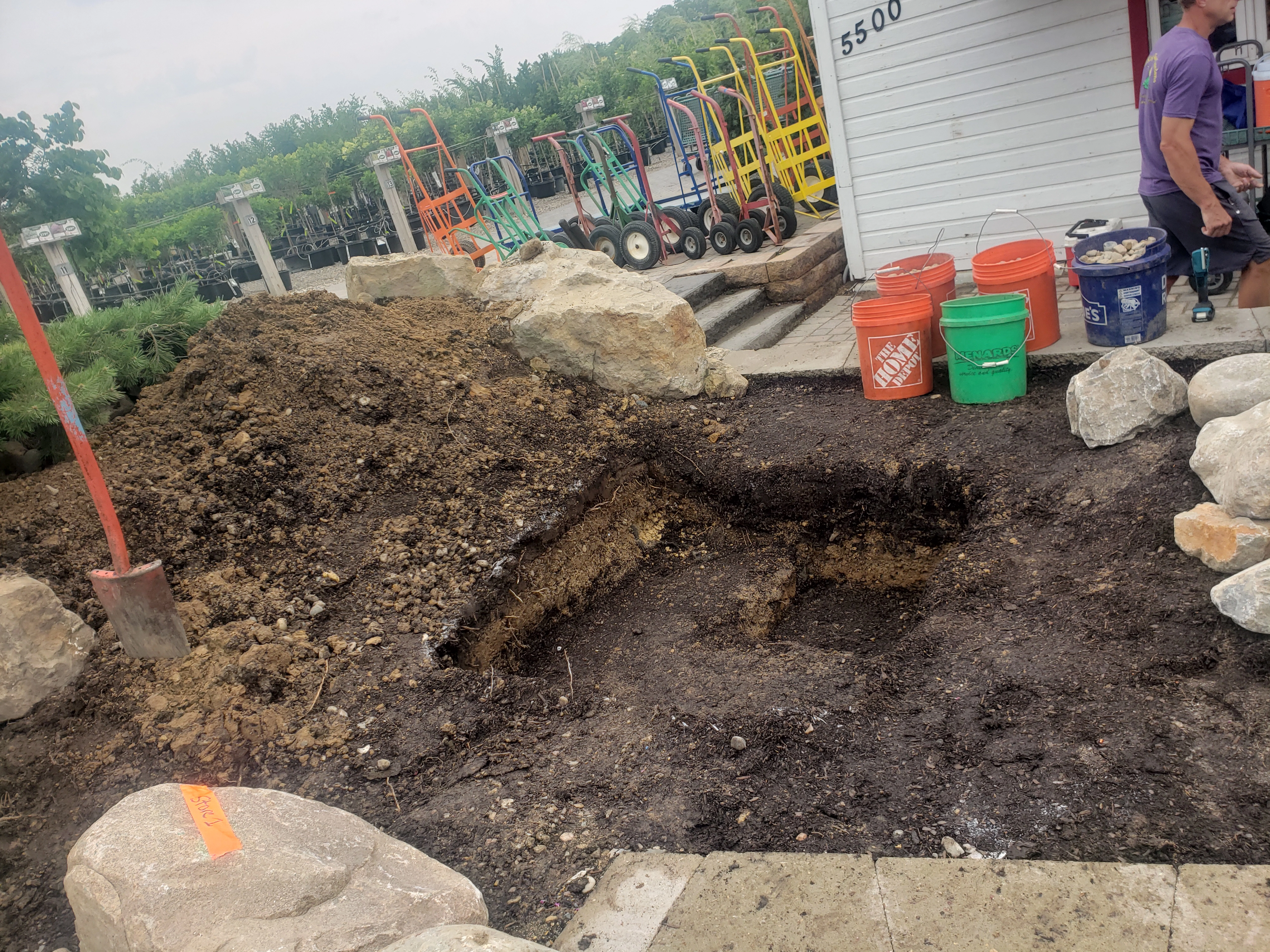
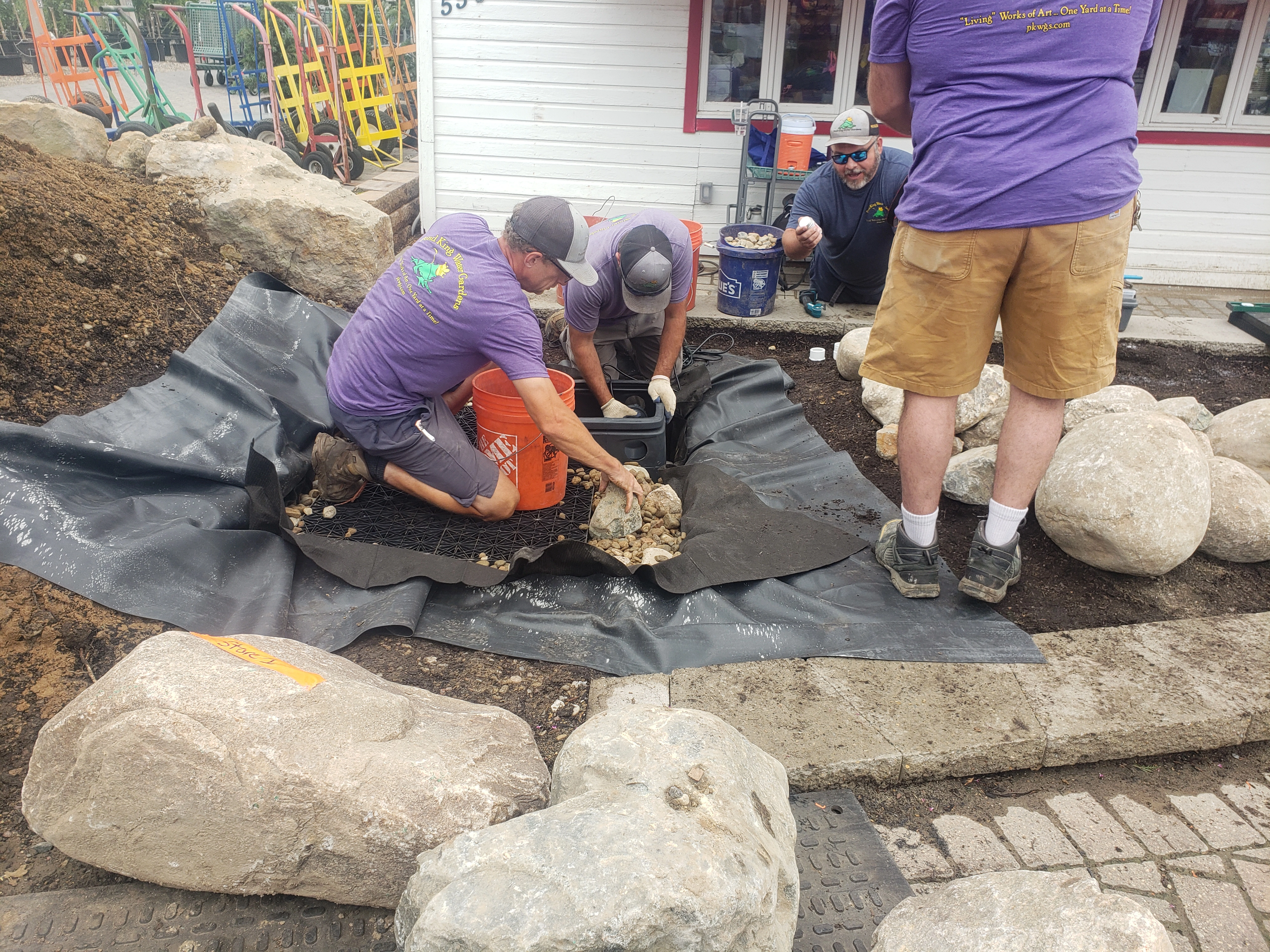
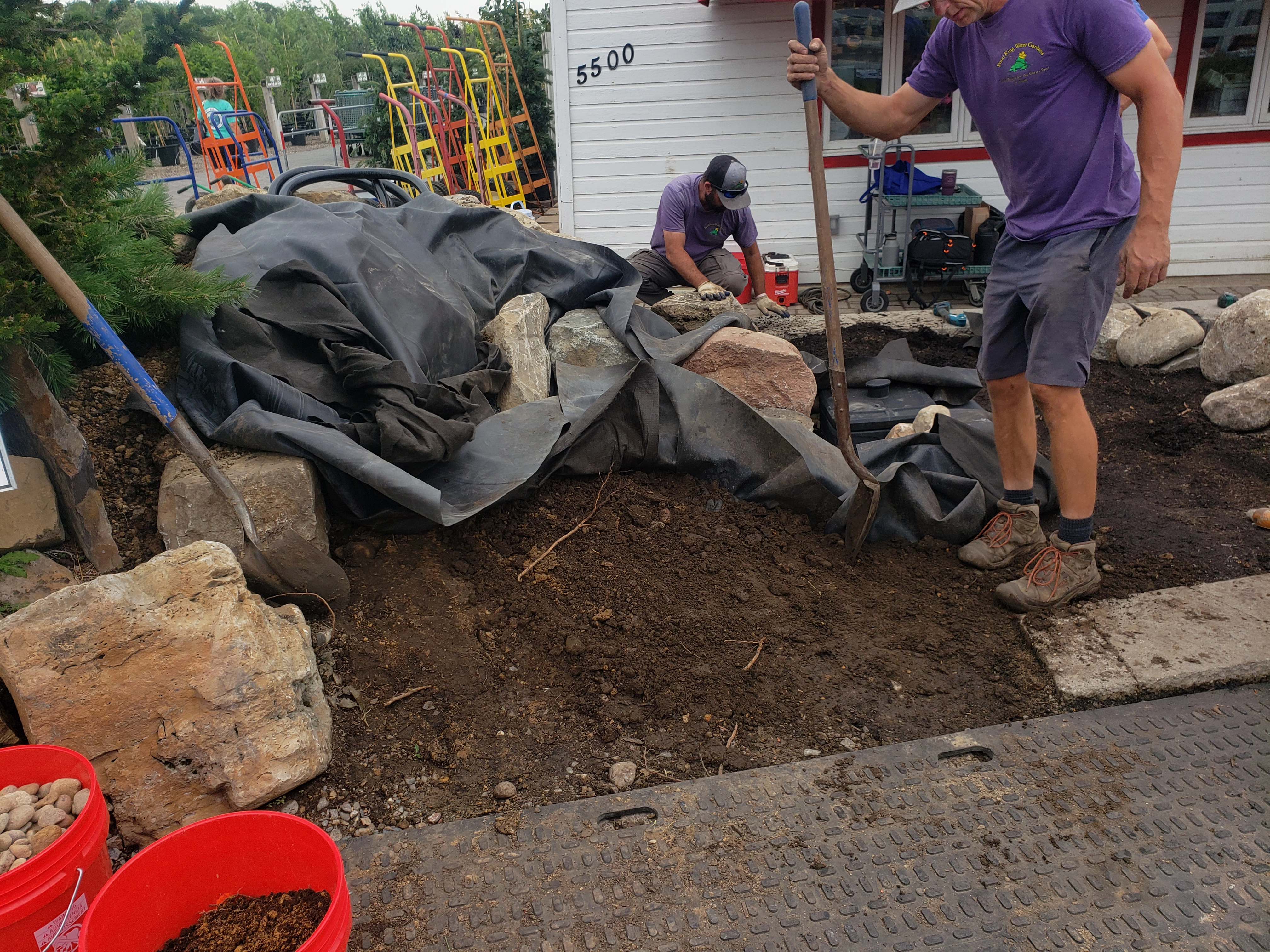
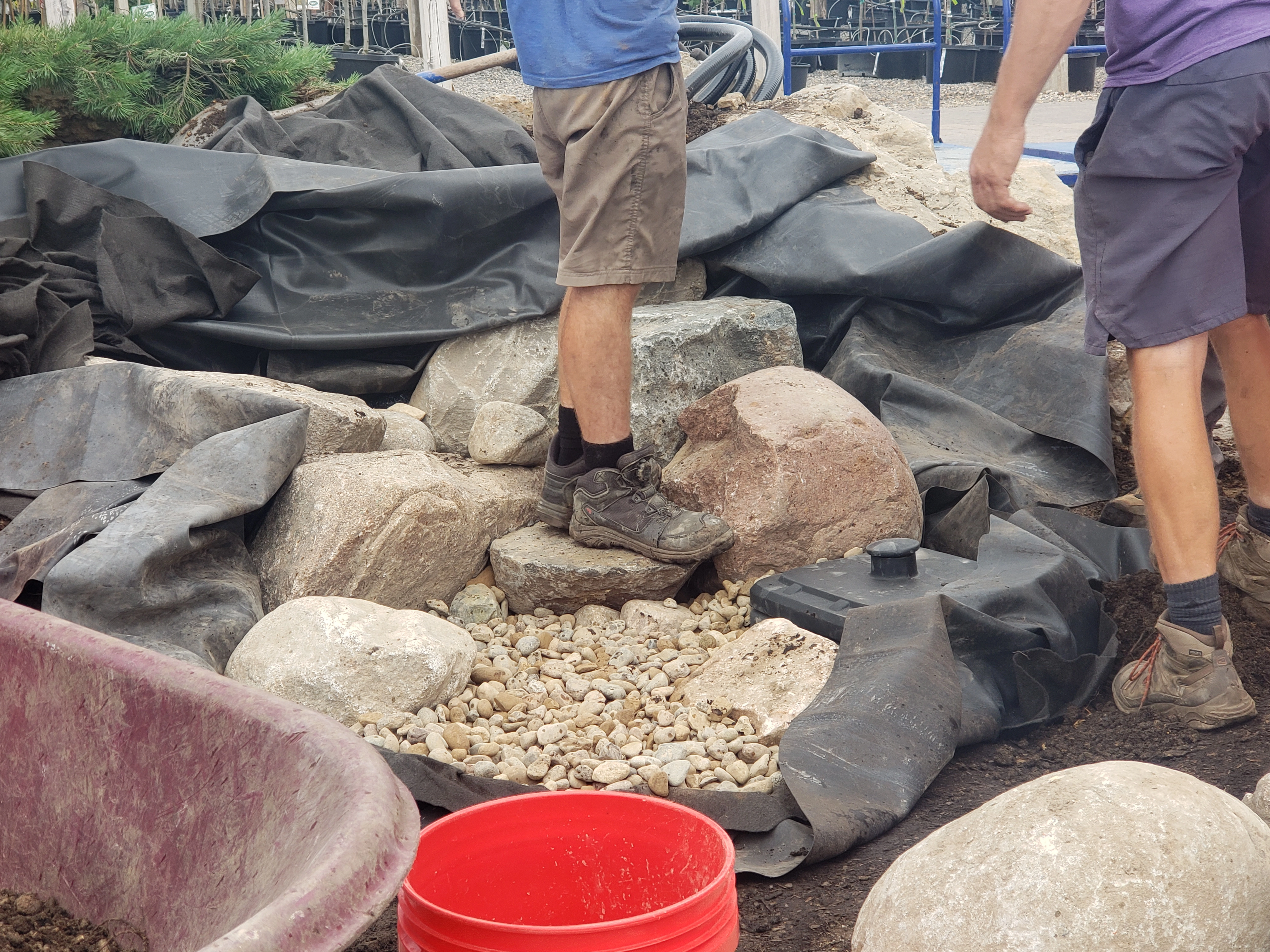
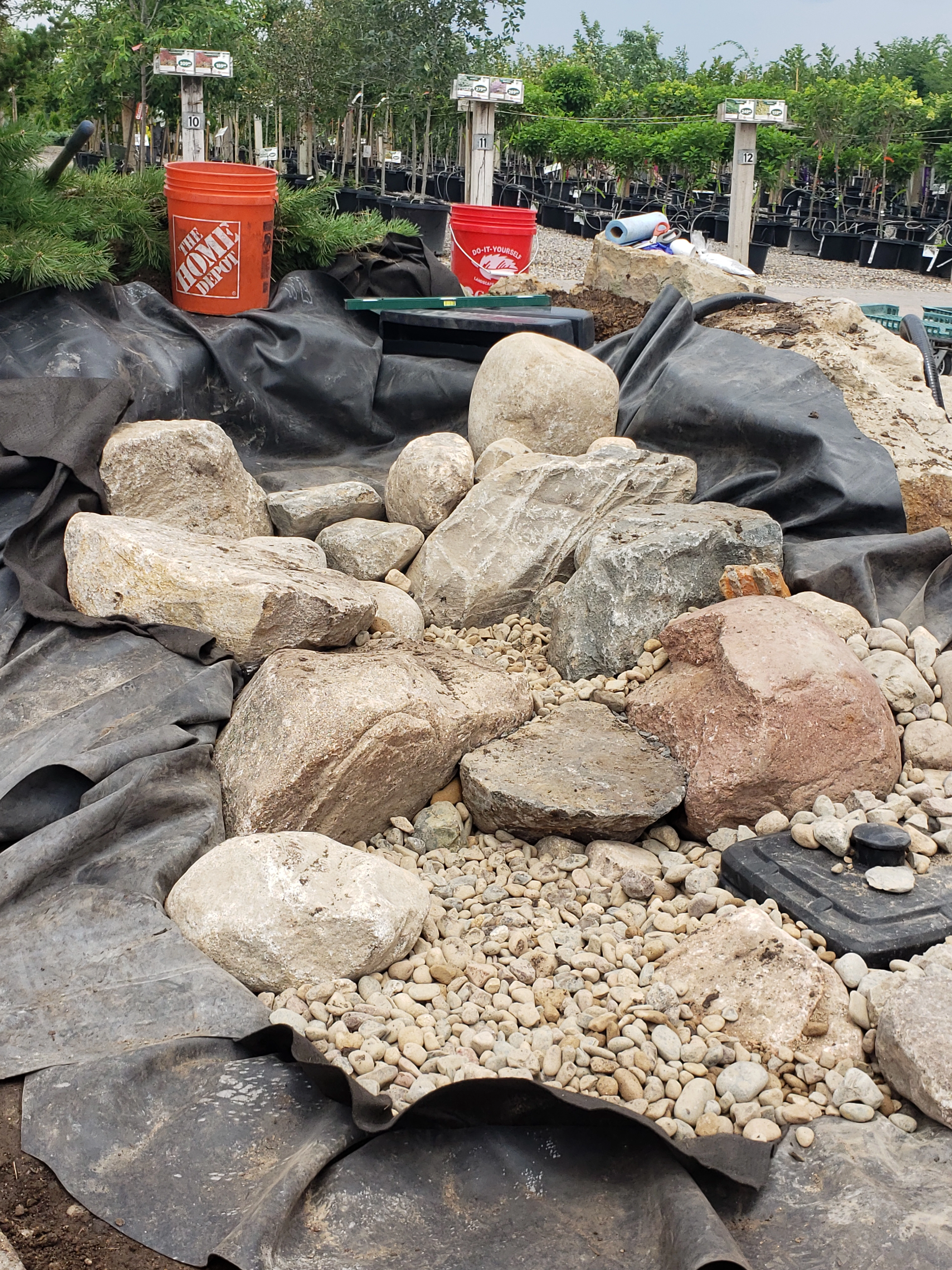
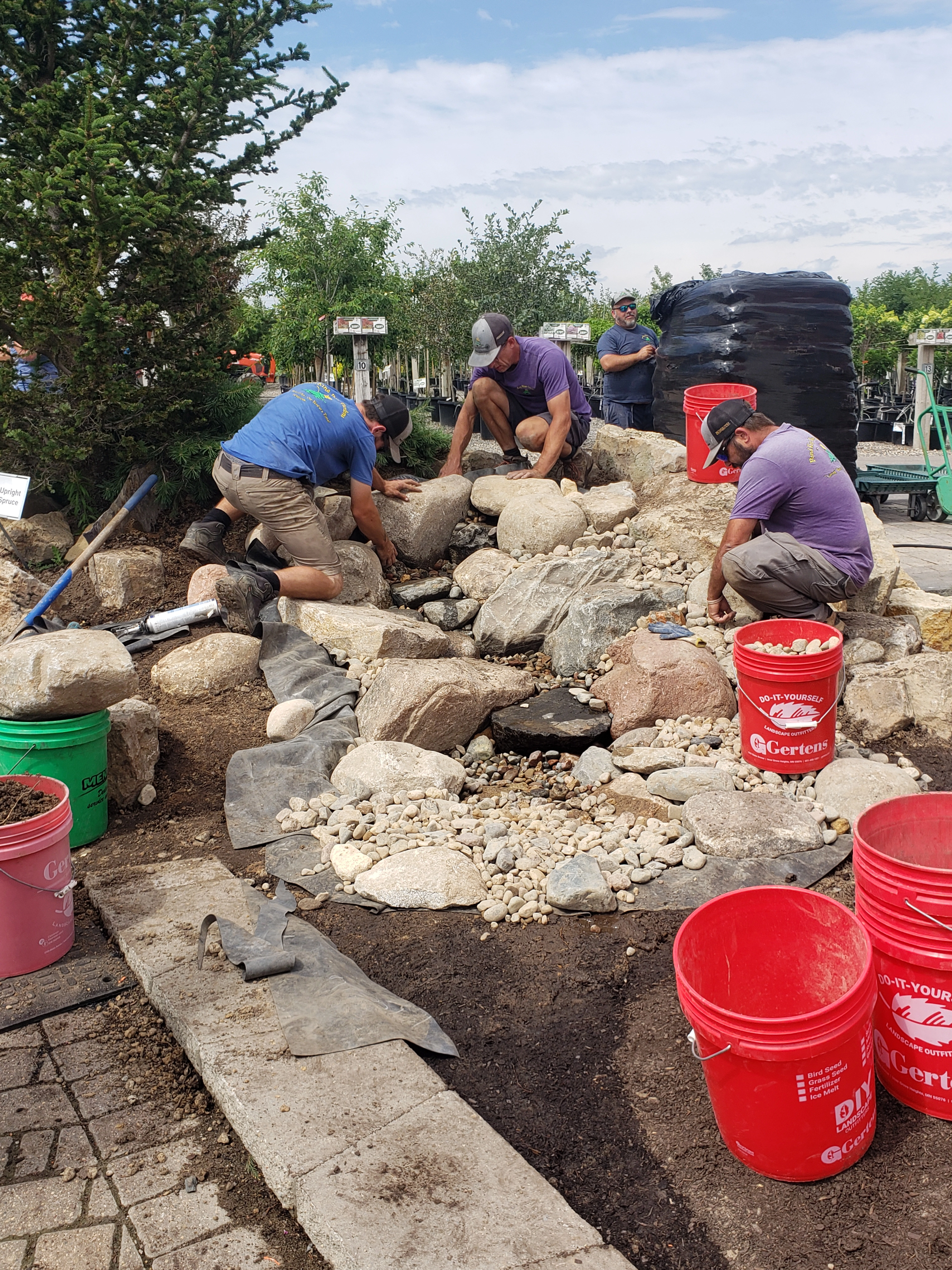
Example: Pondless Waterfall Installation Timeline
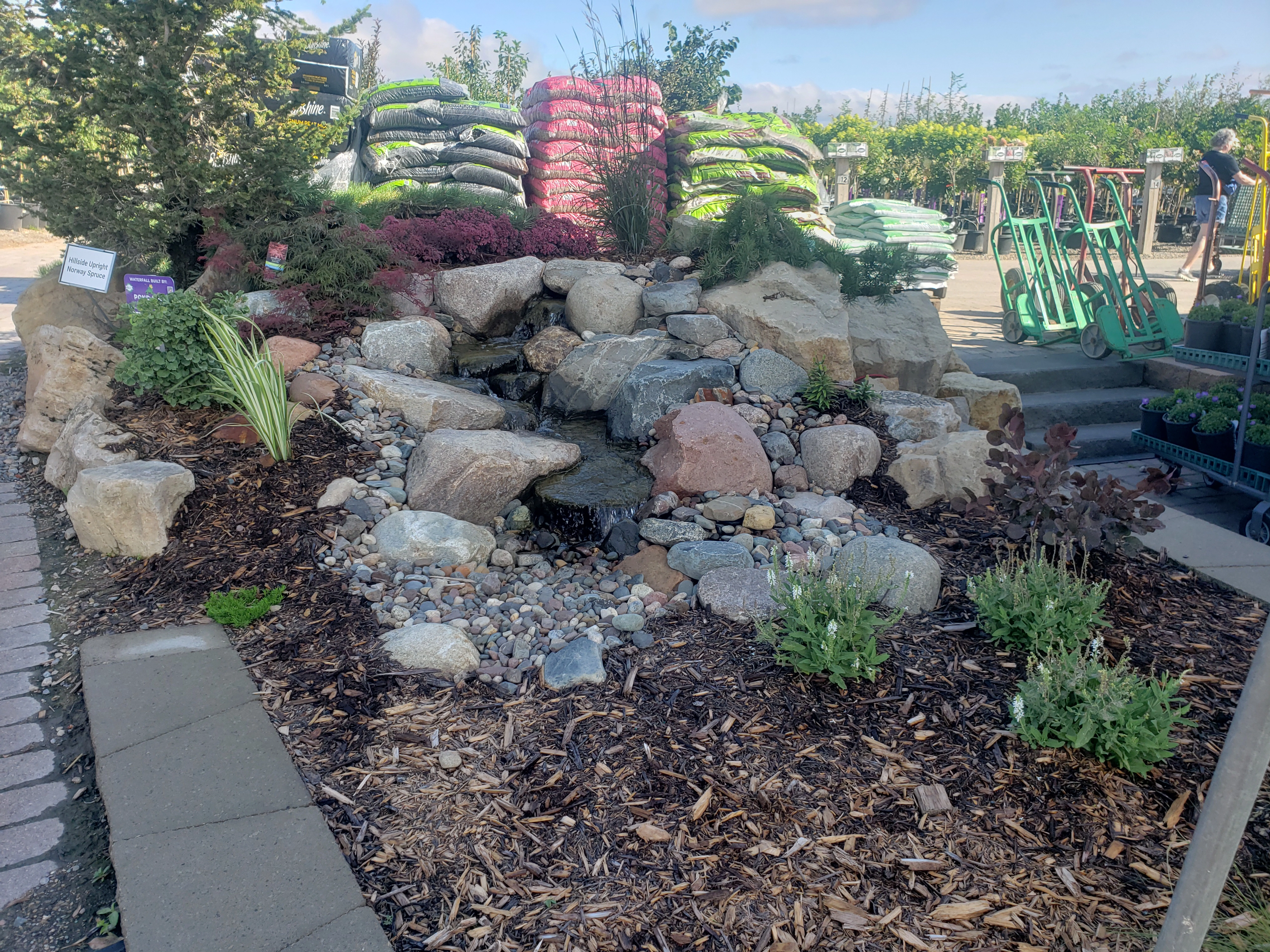
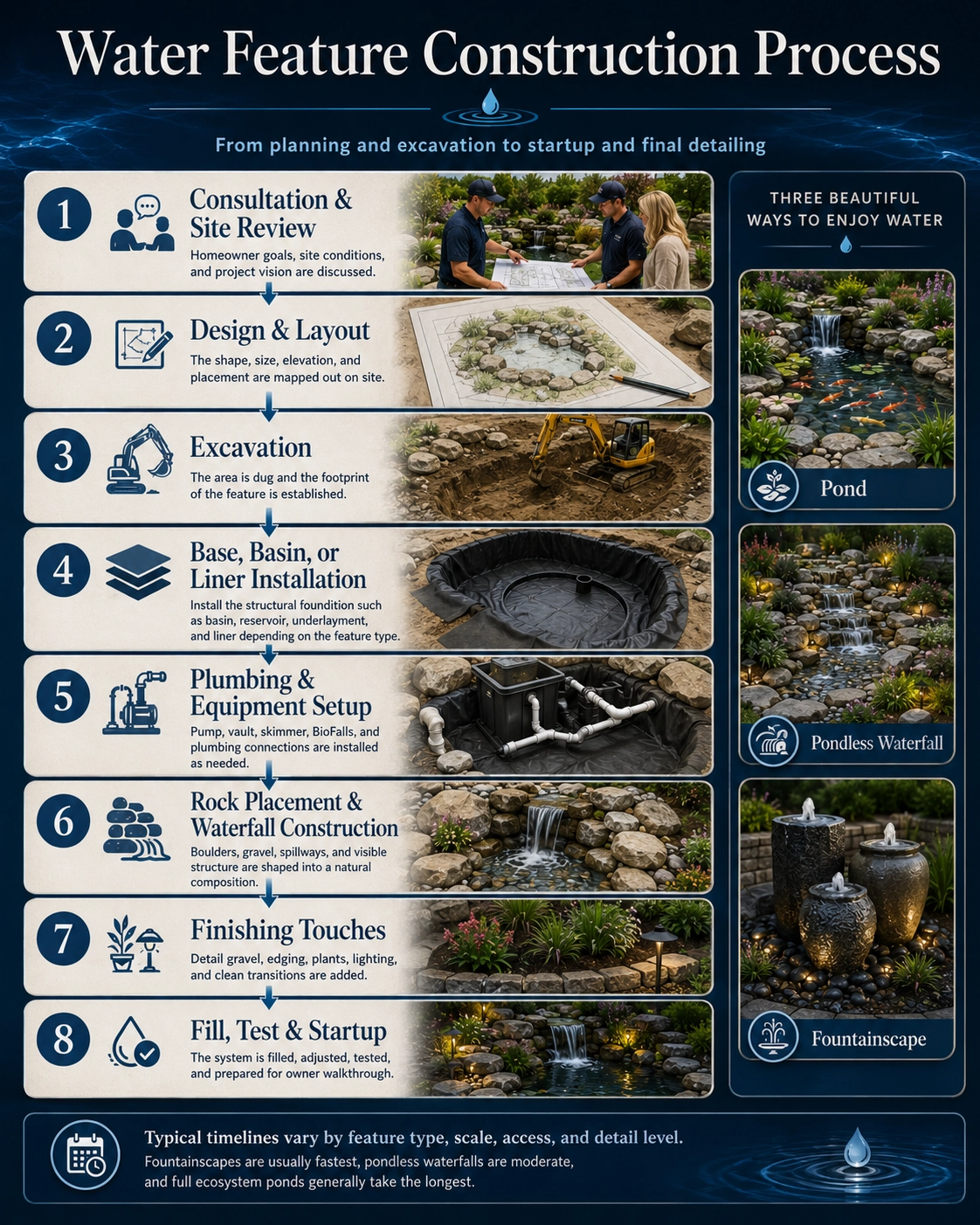
A pondless waterfall may look simple when it is finished, but the finished result depends on a sequence of hidden steps: excavation, reservoir preparation, plumbing, liner protection, stone placement, waterfall shaping, gravel dressing, and final water flow adjustment.
What Can Make a Pond or Water Feature Take Longer?
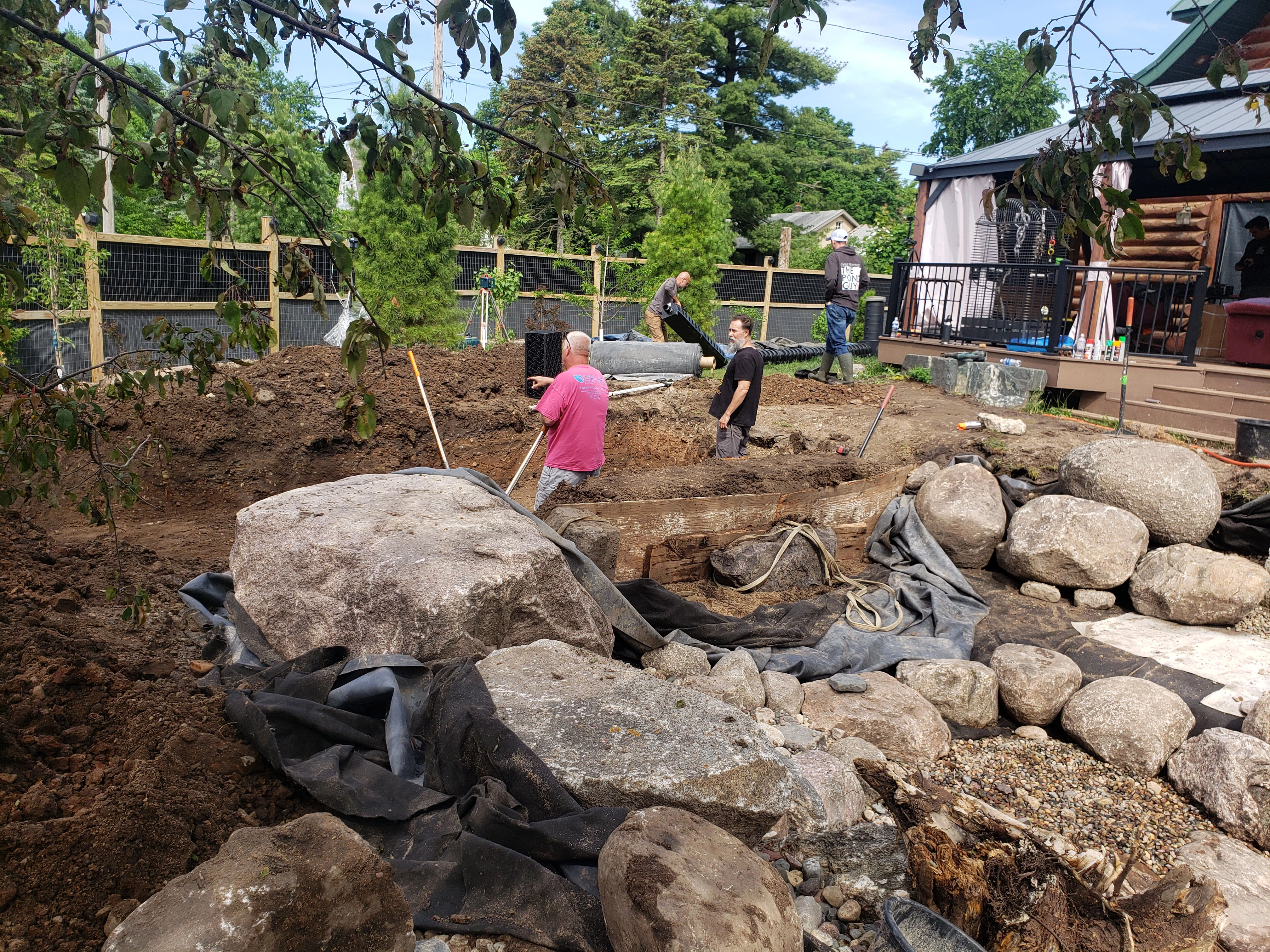
Two projects that look similar in photos can have very different timelines once you get into the yard. The visible feature is only part of the story. Access, soil, drainage, utilities, grade changes, and material handling can all change the pace of the job.
1. Access to the Backyard
Easy access can make a project move faster. Tight gates, fences, steep slopes, narrow side yards, mature landscaping, and limited equipment access can slow things down because materials may need to be moved by hand or with smaller equipment.
2. Excavation Conditions
Soil conditions matter. Heavy clay, rocks, roots, buried debris, wet soil, or unstable edges can add time. In Minnesota, spring soil conditions can be especially important because thaw, rain, and drainage patterns may affect the work area.
3. Rock and Boulder Work
Natural stone is one of the biggest timeline variables. A water feature can be technically functional and still look awkward if the rock work is rushed. Good boulder placement takes time because each stone affects the water movement, edge treatment, and natural appearance of the finished feature.
4. Plumbing and Filtration
Pumps, pipe, check valves, skimmers, biological filters, spillways, and reservoirs need to be installed correctly. These parts are not always exciting to look at, but they are the organs of the system. When they are wrong, the whole feature complains.
5. Electrical Coordination
Many water features need safe power access for pumps, lighting, or future upgrades. If electrical work is needed, that may affect scheduling and coordination.
6. Design Changes During the Build
Small adjustments are normal, especially with natural stone. But major design changes during installation can add time, change material needs, and shift the project schedule.
What Happens Before Installation Day?
The installation timeline is only one part of the full project timeline. Before a water feature is built, there is usually a planning and consultation process that helps define the scope, budget, design direction, access conditions, and schedule.
For Fountainscapes & Waterfalls, the design consultation is part of the trust-transfer process. The goal is to understand the property, the homeowner’s vision, the practical site conditions, and the type of water feature that actually fits the space.
- Initial phone conversation or inquiry review
- Project type and budget discussion
- Site access and location review
- On-site design consultation when appropriate
- Scope, feature type, and general investment planning
- Scheduling and material planning
Design consultation note: Fountainscapes & Waterfalls has a $250 on-site design consultation fee. The fee is credited toward the total project cost if you move forward with the build. If you do not proceed, it is retained as a standalone design service fee. The consultation fee must be paid before the on-site consultation is scheduled.
How Minnesota Weather Affects the Timeline
Minnesota adds its own personality to the schedule. Some days it behaves. Some days it throws mud at the calendar.
Rain, wet soil, frozen ground, spring thaw, extreme heat, and early winter conditions can all affect water feature work. Even when the design is ready, the ground and weather still get a vote.
Spring
Spring is popular for planning, but wet soil and thaw conditions can affect excavation. It is a good time to start the conversation early, especially if you want the feature ready for summer.
Summer
Summer is prime construction season. Schedules can fill quickly, so waiting until the exact moment you want the feature finished may limit available installation windows.
Fall
Fall can be a beautiful time to build, especially for enjoying the feature the following spring. The main concern is timing the project before cold weather and winter shutdown conditions arrive.
How to Plan Ahead for a Smooth Installation
A smoother installation usually starts before the first shovel touches the ground. The more decisions are made ahead of time, the fewer surprises appear during the build.
- Decide whether you want a pond, pondless waterfall, fountainscape, or a combination feature.
- Think about where you spend the most time outside.
- Consider how much sound, movement, fish, plants, or lighting you want.
- Review your general investment comfort before the design consultation.
- Look at access to the work area, including gates, slopes, patios, and obstacles.
- Start planning before peak construction season if you want the feature completed by a certain date.
If you are still deciding what kind of feature fits your yard, start with the lifestyle question first. A pond, a pondless waterfall, and a fountainscape can all be beautiful, but they serve different types of homeowners.
Frequently Asked Questions
How long does it take to build a backyard pond?
Many backyard ecosystem ponds take several working days to install, depending on size, access, excavation, filtration, rock work, plumbing, and weather. A larger or more detailed pond may take longer.
How long does a pondless waterfall take to install?
A pondless waterfall usually takes multiple working days. The timeline depends on the size of the underground reservoir, stream length, waterfall height, boulder placement, and surrounding landscape work.
Can a water feature be built in one day?
Some compact fountainscapes may be installed quickly when conditions are simple. Most custom water features take longer because they require excavation, plumbing, rock placement, water flow adjustment, and finish detailing.
What can delay a pond installation?
Common delays include poor access, difficult digging conditions, rain, wet soil, design changes, utility issues, electrical coordination, material availability, and complex boulder work.
Does Minnesota weather affect pond construction?
Yes. Rain, saturated soil, frozen ground, spring thaw, early winter weather, and extreme heat can all affect the installation schedule.
How far ahead should I schedule a water feature project?
It is best to start early, especially in spring and summer. Planning ahead gives time for design, consultation, estimating, material planning, and scheduling before peak construction windows fill.
Thinking About a Pond or Water Feature?
If you are trying to understand what timeline makes sense for your yard, the next step is a conversation about the space, the feature type, your budget comfort, and when you would like the project completed.
Fountainscapes & Waterfalls designs and builds custom ecosystem ponds, pondless waterfalls, fountainscapes, and water feature lighting for homeowners in New Ulm, Southern Minnesota, and select surrounding areas.